Statics that sell
Vori builds the operating system for independent grocers: checkout, pricing, ordering, shrink tracking, loyalty, and reporting in one platform built for how a corner store actually runs. To grow, Vori needed to reach a narrow, skeptical audience and turn paid social into real pipeline, not vanity leads. So we made a counterintuitive bet: quiet, handmade statics on a feed that rewards video.
Challenge
Vori faced a set of challenges that most performance playbooks handle badly.
A narrow, hard-to-reach audience
Independent grocers running one to a few stores are a small, specific market. Generic SaaS advertising talks past them, and broad targeting wastes spend on people who will never buy.
A video-first feed that buries brand ads
Meta rewards video, so most advertisers flood the feed with it. Polished brand spots blend into an endless scroll and get tuned out.
A trust gap with software
Grocers have been burned by clunky legacy systems. Another shiny tech ad reads as a pitch, not a solution, and earns instant skepticism.
Leads that don't become deals
Vori didn't need more form-fills. It needed pipeline, measured in real sales stages and closed business, not clicks or cost-per-lead alone.
Our approach
Pearmill treated creative as the growth system, the targeting, the message, and the proof, and built the measurement to match.
Creative as the targeting mechanism
Instead of chasing the audience with narrow settings, we let the creative do the targeting. Every concept was scraped from real grocer personas, sales calls, and store visits.
Environmental Trojan-horse statics
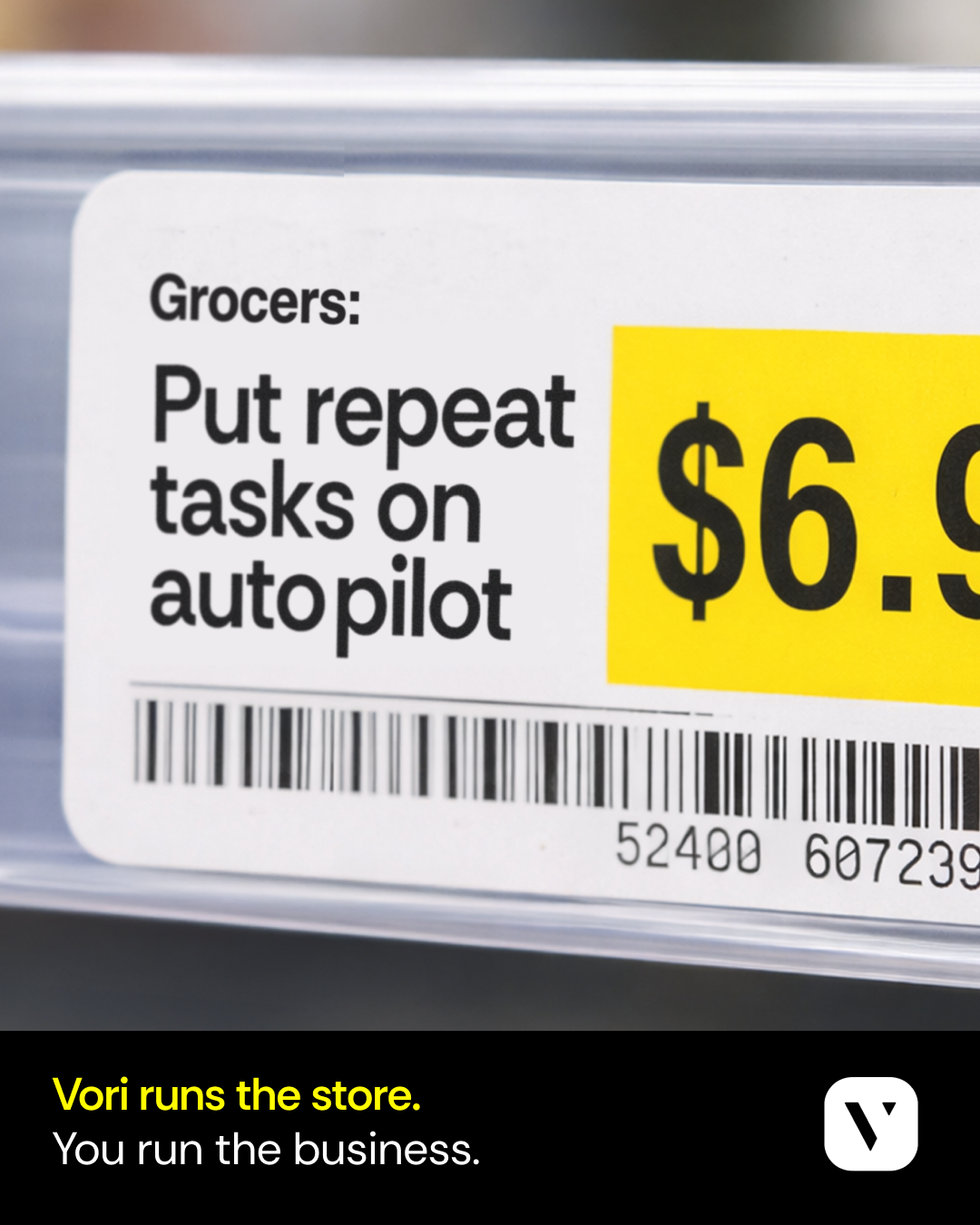
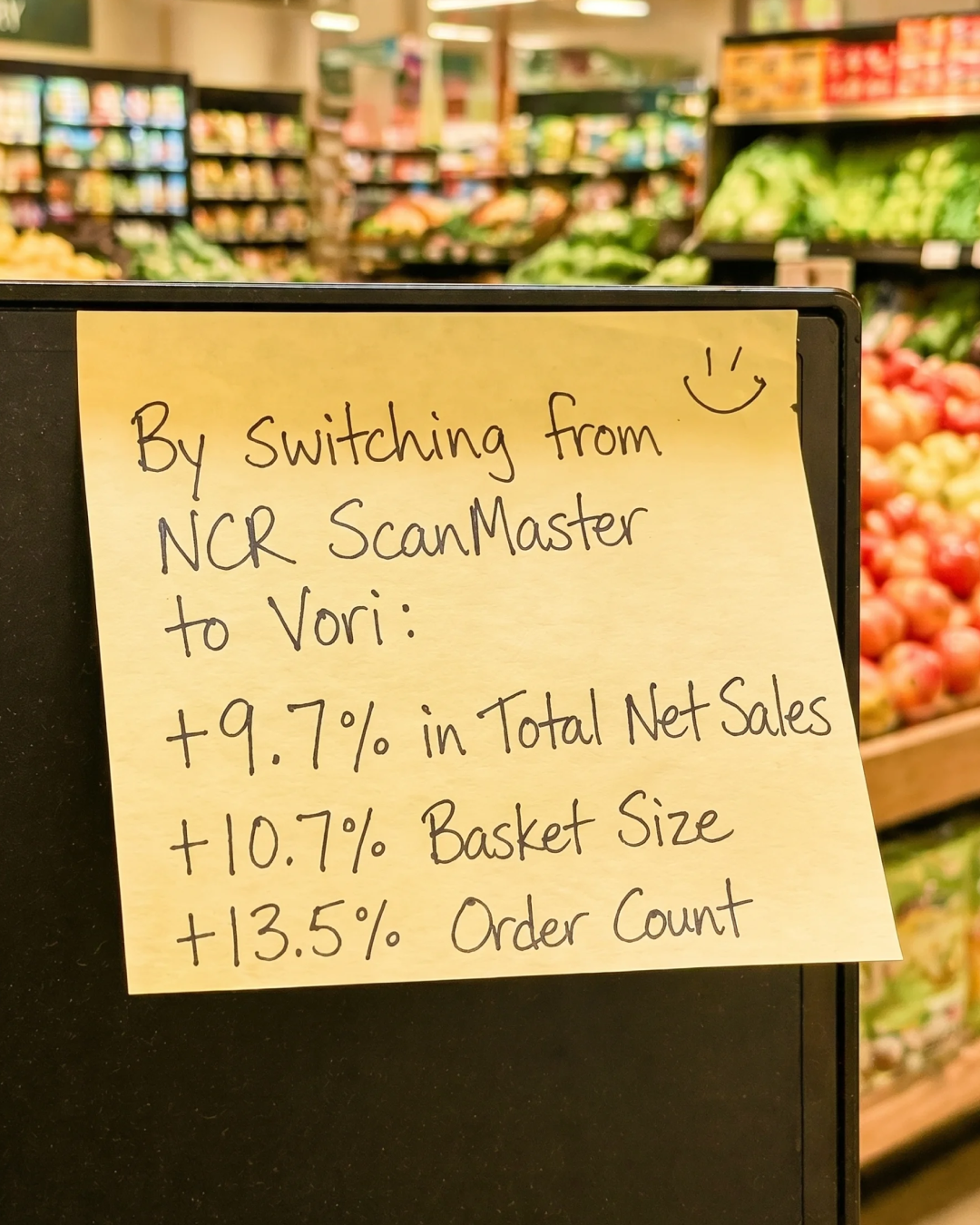
Ads that look like the grocer's own world: a taped-up sign, a Post-it on the register, a note on receipt paper. They slip in disguised as something the store made.
Statics over video, on purpose
Against the platform default, we bet on statics. In a feed saturated with video, a quiet, familiar static is what actually stops the scroll.
Pipeline-based measurement
We connected Meta and HubSpot into one creative pipeline report, judging every ad by the deals and pipeline it generated at each sales stage.
Action
Pearmill ran a tight loop of insight, production, and measurement.
Persona scraping and pillars
We distilled real customer pains into testing pillars, margins, promos, waste, and testimonials, so every round was purposeful rather than a guess.
Environmental static production
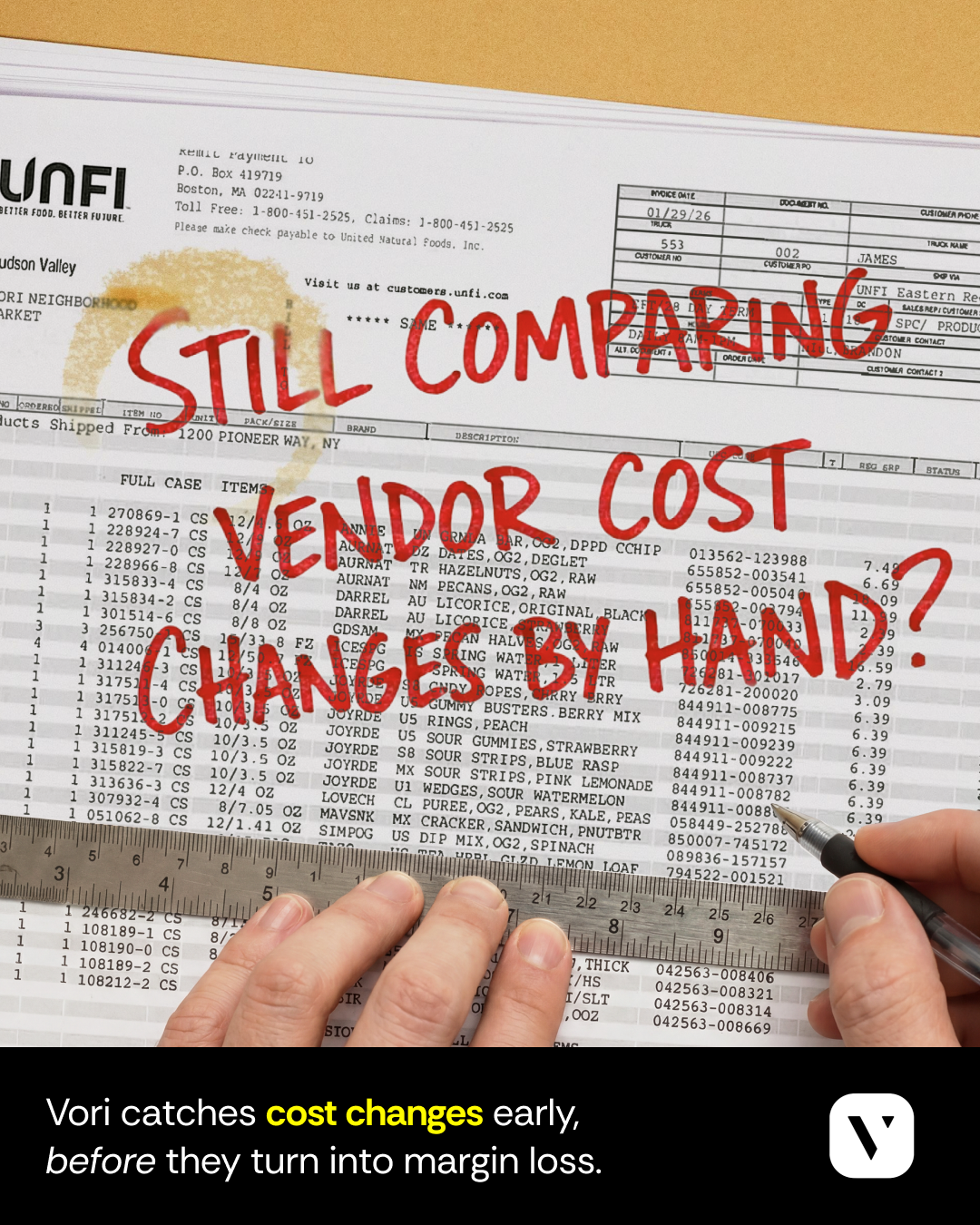
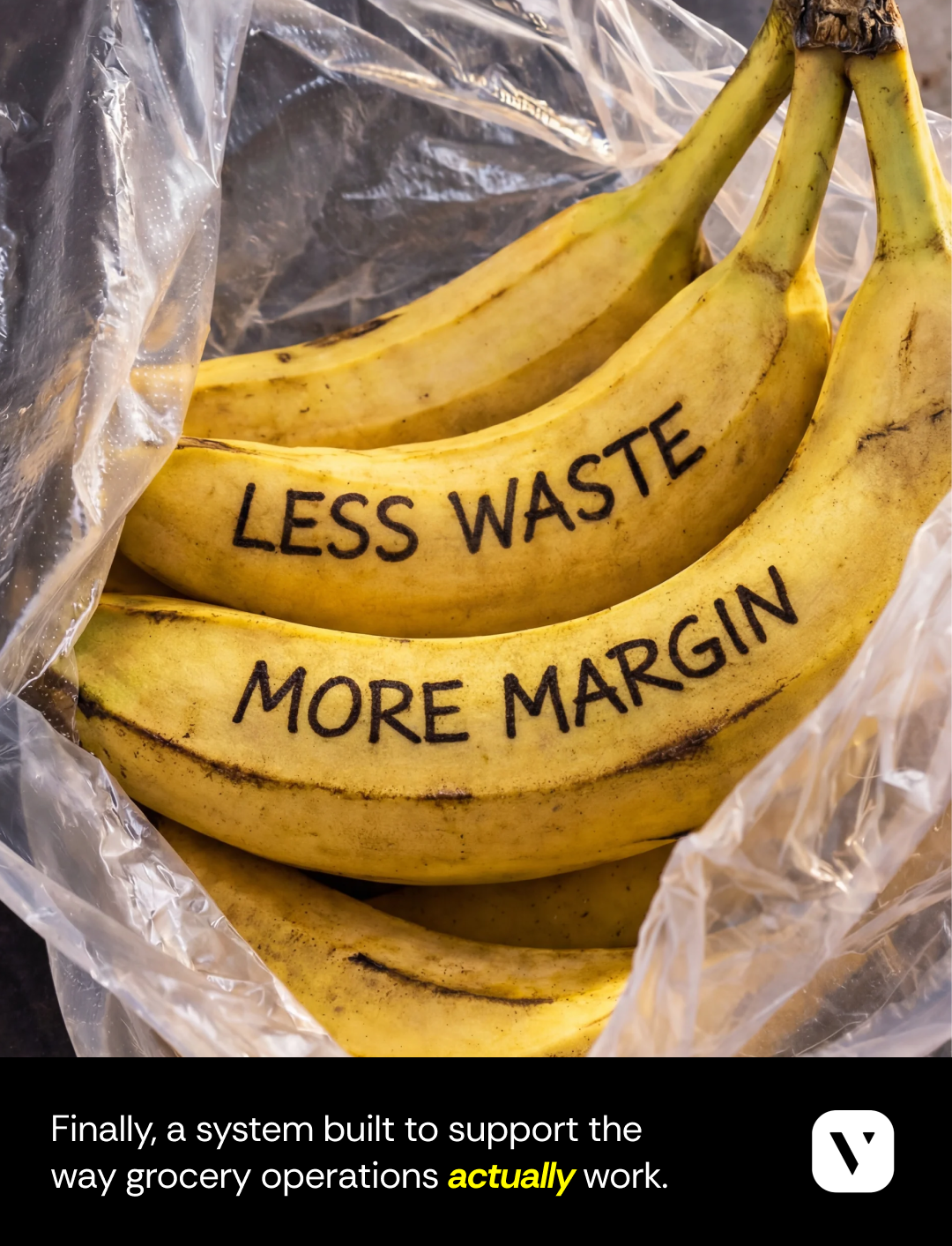
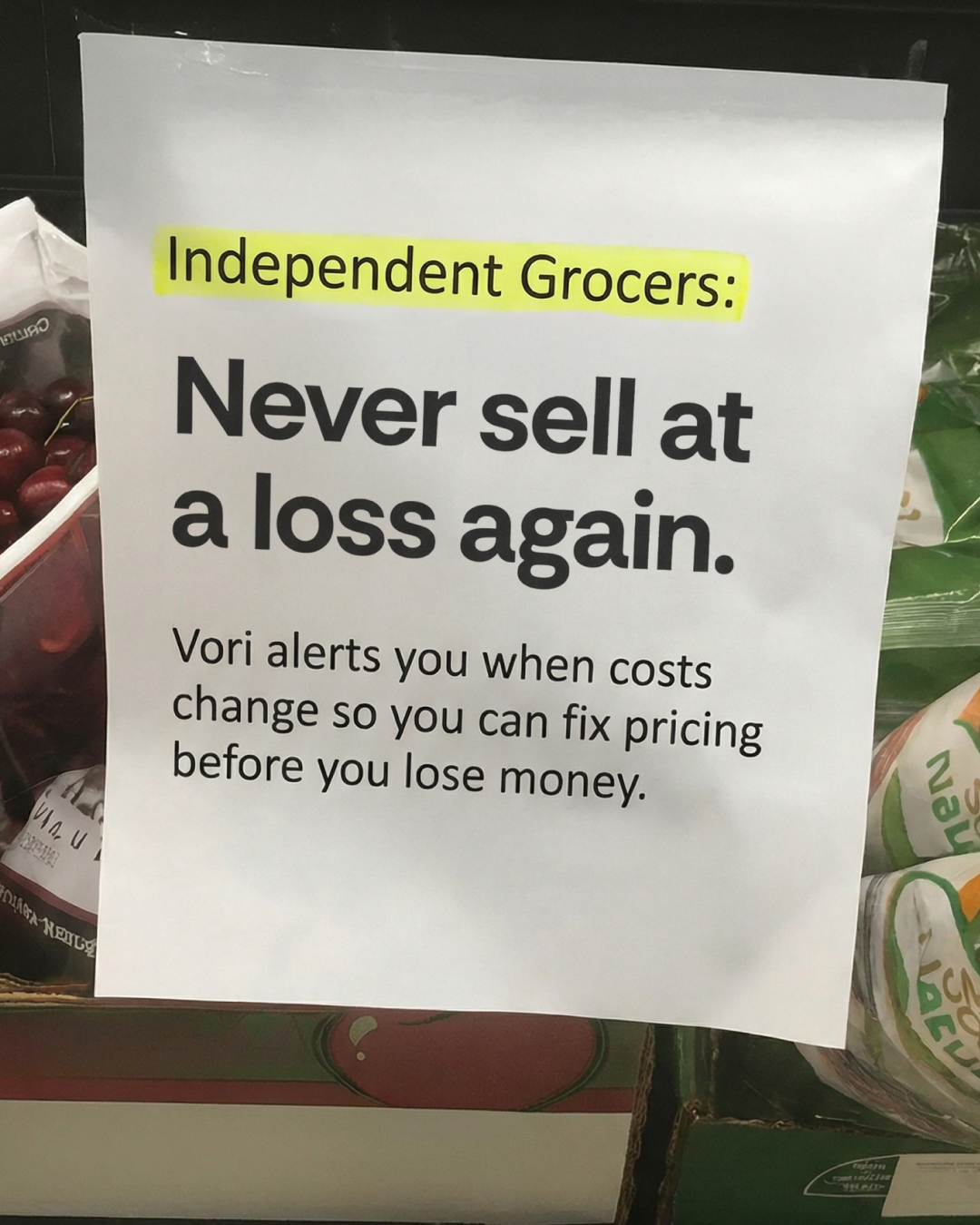
A library of handmade-feeling statics, each tied to a pillar: a real vendor invoice, spoiling fruit, a promo sign, and a never-sell-at-a-loss note.
Grocer testimonial mini-docs
Short, real testimonials from store owners delivered proof after the statics warmed the audience up, the pieces most responsible for closing deals.
Rapid micro-edit testing
Tight multivariate tests within concepts. On the waste pillar we tested avocados, strawberries, and bananas; the banana won, cutting cost-per-lead by about 22%.
Full-funnel pipeline reporting
The Meta and HubSpot pipeline report let us double down on the ads driving real pipeline and retire the ones that only drove clicks.
The creative
Ugly on purpose. Each ad built to look like the grocer's own world.
Results
The creative-led system turned paid social into a genuine sales channel.
One static carried the quarter
The Stop Comparing static, a real vendor invoice, drove roughly 36% of all paid-social pipeline in the quarter, the single biggest creative contributor.
Statics beat video
Environmental statics produced leads about 38% cheaper than video, and dominated pipeline contribution while video stayed negligible.
Testimonials sealed the deals
The grocer mini-docs were the most reliable source of closed-won business, moving warmed-up buyers over the line.
Sales-ready, not tire-kickers
The fastest creative closed a deal in just 5 days, with won deals averaging a 28-day cycle from a cold paid-social touch.
Handmade beat polished
In a head-to-head test, the rough Never Sell at a Loss ad outperformed a polished, more branded version. Looking like the store beats looking like an ad.