
Why we’re shooting less B-roll and building it with AI
I know how that sounds.
It sounds like we've given up on the craft. It sounds like we're choosing computers over people.
But the reality is, I love production. I love the feeling of seeing the graded footage from a B-roll shoot at the end of the day. I love the energy of a team working together to make something beautiful.
However, I hate what the logistics of production do to an idea.
If you work in creative, you know this feeling: You have a vision. It's perfect in your head. But then reality sets in. You can't afford the location. It's raining on the only day the talent is available.
Slowly, your vision gets chipped away by the constraints of the physical world. By the time you wrap, you aren't shooting the idea you loved; you're shooting the compromise you could afford.
So, we started trying something different. We stopped shooting the small stuff. We started building it with AI.
And no, we aren't going to stop shooting bigger campaigns. But I don't think we are going to shoot as much B-roll as we used to.
Consistency, not just "content"
The biggest skepticism I hear—and I felt it too—is that AI feels random. It feels soulless because it's usually just a slot machine giving you random faces.
But we found a way to bring the direction back into it.
We use a node-based workflow (it sounds technical, but it's basically just a map) to create a specific character. Let's say, a warm, friendly exterminator for Orkin. We give her a name. We define her face, her smile, the way she stands.
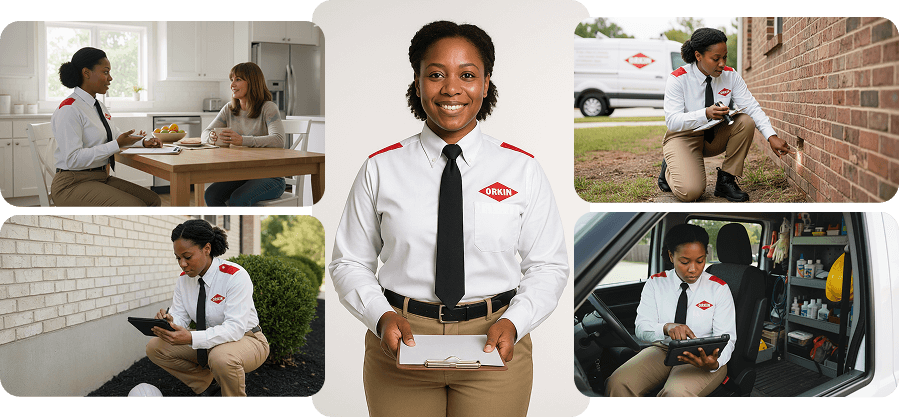
Once she exists, she isn't just a generation. She's a character we can direct.
We can place her outside a suburban home. We can move her to a backyard. We can change the lighting from harsh noon to a soft "Golden Hour."
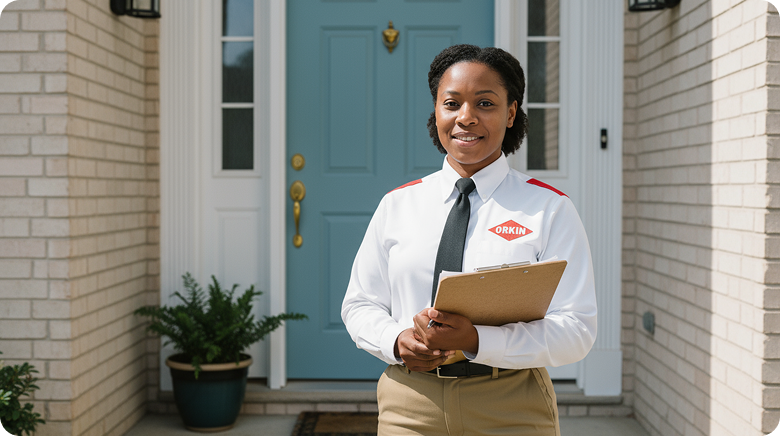
We are treating her like an actor who never gets tired, and who lets us try a hundred different creative angles without worrying about the rental fee on the location.
The irony: It takes a human to break the perfection
There is a misconception that AI is "easy" because it does the work for you. But the irony is that making AI footage work actually requires more "filmmaking" knowledge, not less.
If you just let the AI generate what it wants, you get a basic scene that looks like it's straight from iStock. Perfect skin, perfect teeth, perfect sharpness. It looks cold, alien, and fake.
To make it feel human, we have to break it.
This is where having taste becomes our biggest advantage. We spend our time adding the "mess" back in. We add grain. We soften the focus. We tell the model to mimic the color science of old Fujifilm cameras. We ask for "ungraded" footage that looks raw and vulnerable.
We are intentionally designing the imperfections that make a video feel like a memory, not a render.
Empowering the director's chair
The skeptics worry that we are replacing artists. I worry about that too.
But when I look at our process now, I don't see less creativity. I see more of it.
I see my team spending their energy on lighting, composition, and mood—instead of spending their energy on parking permits and catering orders.
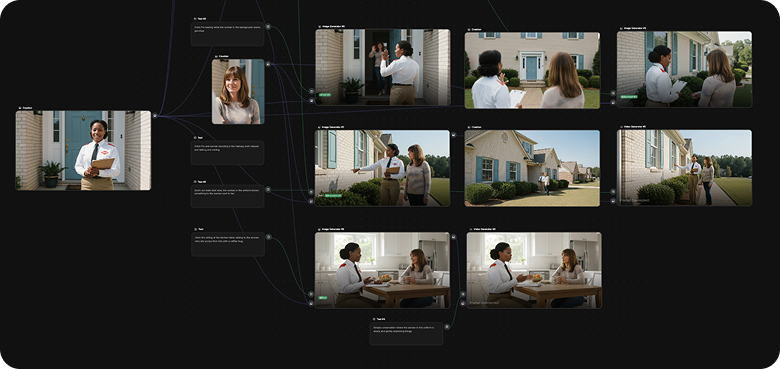
The way I see it, AI is empowering the human who used to operate the camera to take the director's chair. I don't think traditional production is dying. But I do think the days of spending $50k for a shot of a pest inspector looking over a house are probably over.





The author


.svg)


